
Soot and odor removal in Wichita, KS
Soot and odor work in Fire Damage Restoration in Wichita, KS follows the deposits that remain after smoke has moved through a house. Some are visible on a wall; others sit in porous materials or sheltered spaces. The work needs to connect the smell with possible sources rather than treat fragrance or a clean-looking room as the answer.
A smell is a clue, not a scope
The room where an odor seems strongest may not contain every source. Smoke can reach cupboard interiors, wall openings and soft materials beyond the area that burned. The description on the call is useful, but it cannot identify all of those deposits. A walk-through can relate the reported smell to the rooms, materials and paths that need examination.
Odor can also be uneven. A hall may seem less affected than a closet beside it, or a room may look much cleaner after loose residue has been removed while still carrying a smoke smell. Those observations should be recorded without treating them as proof of one treatment. The condition of the remaining materials is part of the question.
A fragrance does not describe whether residue has been removed. This method is about locating and addressing deposits and materials, not covering a smell with another smell. Any proposed treatment should be explained in relation to the surfaces and spaces involved, with its limitations made clear before the work is agreed.
Visible soot and sheltered deposits
Loose soot may sit on a painted surface where it can be seen, while fine deposits remain around trim edges or within an opened cavity. The same house can contain dry particles and heavier, smeary film. Handling them as one uniform substance can obscure why some surfaces need one approach and others need a different decision.
The first cleaning step may involve dry removal intended for loose deposits. Later cleaning needs to suit both the residue and the finish. That description is not a do-it-yourself sequence. The proposal should explain the work to be undertaken without asking the homeowner to experiment on a wall, a piece of furniture or an electrical fitting.
Sheltered places deserve explicit mention. Cupboards, drawers, closets and the undersides of shelves may not be obvious in an opening photograph. They can still be part of the examination. A written room list helps keep those places visible in the plan instead of treating an improved central wall as evidence that the whole room has been addressed.
“Find the material behind the smell before naming the treatment.”
Materials that hold more than a surface mark
Unsealed wood, insulation, carpet padding and some upholstery can retain deposits differently from glass or finished metal. A surface that can be cleaned does not establish what is possible for the material beside it. The scope should distinguish cleaning proposals from removal proposals and state which belongings or building layers are being discussed.
Insulation in an opened wall or attic may be proposed for replacement where smoke or water has affected it. That is a material decision, not an automatic rule that every house needs new insulation. The location and condition need a reason in the scope. Replacement also needs coordination with the framing and finish work that follows.
Contents need a separate conversation. A hard cabinet shell, a fabric cushion and a boxed set of papers do not present the same cleaning question. The proposal can identify items for separate handling or further evaluation rather than make one broad promise about everything in a room. The homeowner's decisions about belongings should remain clear in that record.
Treatment after source work
Odor treatment can be considered after the relevant residue and material decisions have been made. A method selected for a particular room is not a substitute for deposits left behind in an adjacent space. The written description should say which spaces are included and how the treatment relates to cleaning or removal already proposed.
Thermal fogging and hydroxyl equipment are examples of methods used in restoration practice. Mentioning them does not mean either is appropriate for an unseen house. The choice, preparation and use belong to the proposed professional work. This guide provides no equipment instructions and makes no statement about occupancy during treatment.
Sealing a cleaned material may form part of a repair plan where a coating is appropriate. It should not stand in for evaluating a deeply damaged member or a wet layer. The sequence needs to make clear what is being retained, why it is being retained and what condition is expected before it is concealed by a new finish.
The den, the cupboard and the duct
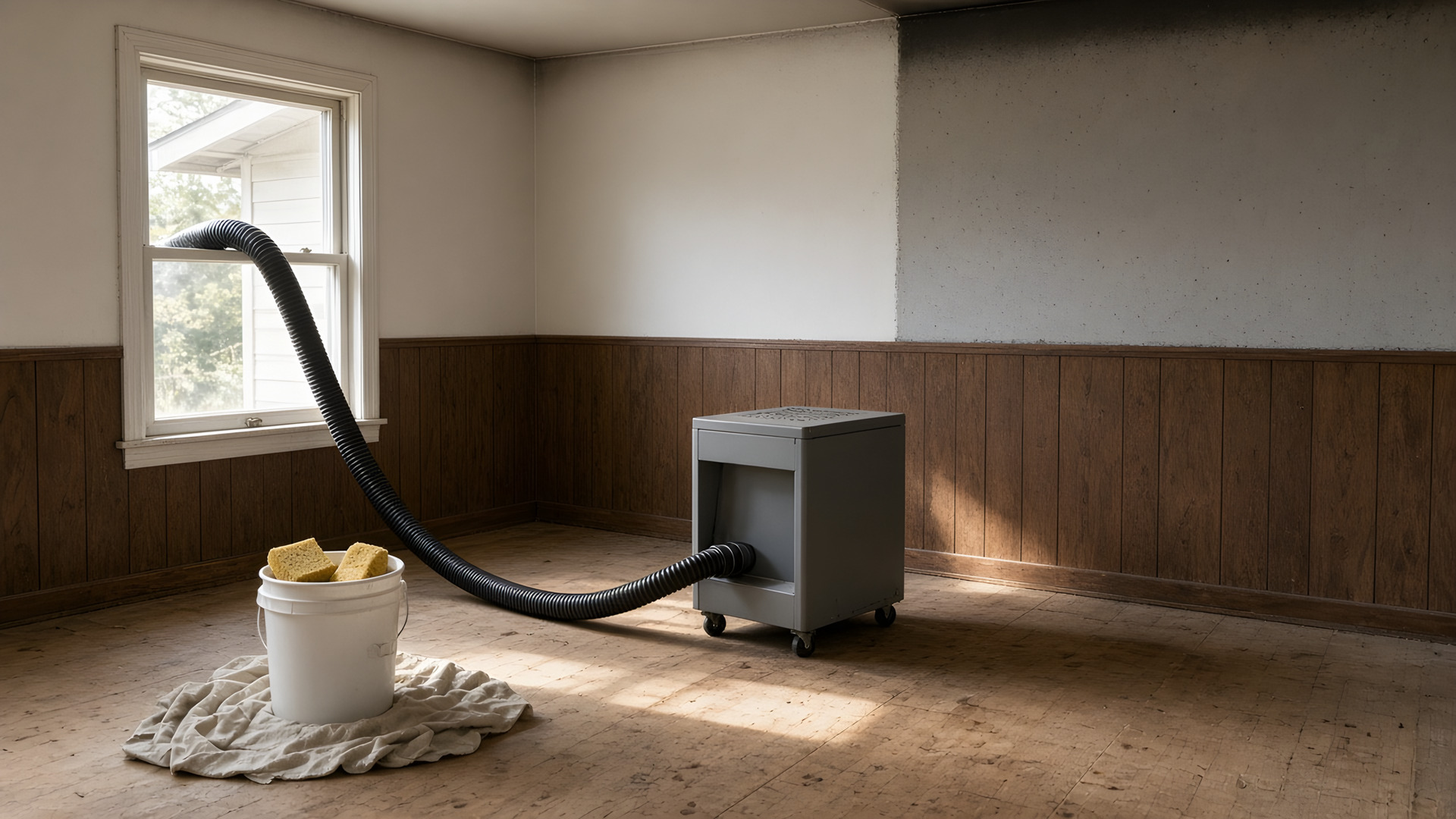
The supplied den photograph shows a wall with different visible surface conditions and plain restoration equipment. It illustrates a stage of work, not proof of an outcome or a diagnosis for another house. The image is useful as a reminder that surface appearance can change across the same room while the written scope still needs to identify all included locations.
A cupboard off that room might require its own cleaning description. A duct opening might raise a separate system question. A fabric item might need handling outside the room-cleaning task. Those distinctions make the proposal longer than a slogan, but they help explain where labor and materials are being directed.
In Wichita's colder season, callers may remember whether the heating fan was operating as smoke spread. That information can help frame questions about the return paths. It is not an instruction to start the furnace or a conclusion that the whole system needs a particular treatment. The equipment and its internal condition belong with the appropriate trade.
Reading the odor-work lines
Cost depends on how far deposits reached, which materials can remain, access to enclosed spaces and any separate handling of contents. Repeating a treatment without identifying an overlooked source may not answer the original question. The scope should describe the reason for the proposed work rather than offer an unexplained equipment charge.
Ask whether dry residue removal, washing, material removal, separate contents work and any odor treatment are included. Those tasks can share a room without being the same task. A written quote after examination should explain their boundaries and identify any question that requires another evaluation. No numerical range here represents the price of an unseen house.
A later report of odor should be tied to a location and circumstance rather than treated as a reason to repeat every original task. The work record can help distinguish a room that was included, a material that was retained and a space not yet examined. That is a more useful basis for discussion than a claim that a treatment settles every possible source.
When repair enters the conversation
Removing a finish may reveal a building layer that needs repair. That finding belongs in the reconstruction discussion, with the condition of any load-bearing material evaluated separately from odor work. A coating cannot decide whether a member should remain. The framing feature explains why structural questions should not be folded into a cleaning heading.
Where structural repair or remodeling is proposed, confirm requirements with the Metropolitan Area Building and Construction Department for Wichita and unincorporated Sedgwick County, or the city responsible for another property. This page does not give legal or permit advice. Its purpose is to keep the work descriptions distinct enough to ask the right office the right question.
Call Wichita Fire Damage Restoration Pros with the city, the rooms where the smell is noticed and any surfaces already known to carry deposits. You do not need to name a treatment. The conversation can begin with the house and leave method selection to the examination and written proposal.
Keep an enclosed space in the room record
A closet or cupboard can be easy to omit when the conversation centers on the largest visible wall. Naming those enclosed spaces makes it possible to state whether they were examined and whether their surfaces are included. The record should not imply a finding where access was limited or belongings prevented examination.
That distinction also helps with contents. An item proposed for separate evaluation should remain identifiable in the written description rather than vanish beneath a general promise about the room. The proposed work may concern a surface, an item, a building layer or a combination. Each needs an understandable boundary and a reason for the selected approach.
When the scope connects those details, odor work becomes less of an unexplained add-on. The homeowner can see the relationship between a reported smell, the locations examined, material decisions and any treatment considered. The plan should leave room for unresolved questions without claiming that a single method can answer every deposit in every space.
Connected Method Features
Explore related chapters: Surface film and ceiling cleaning, and Coordinating a wider job.
